
How to Extend the Life of Your Awning: A Seasonal Maintenance Guide
Here's a practical, season-by-season guide to awning maintenance from the team at London Awnings, based on 40+ years of experience with Ontario's climate.
Whether you have a standard style or a cassette-style retractable awning, a terrace awning, a window awning, or a fixed stationary awning, this guide has you covered.
Spring: Wake Up Your Awning
After a winter in storage or extended retraction, spring is the time to inspect and prepare your awning for the season ahead.
Step 1: Full Visual Inspection
Check the frame and arms for cracks or bent components
Inspect the fabric for mould, mildew, or tears
For motorized systems, test the motor and controls
Check mounting hardware: bolts and brackets should be tight and corrosion-free
Step 2: Deep Clean the Fabric
Awning fabric collects dust, pollen, and debris over the winter. Here's how to clean it properly:
Extend the awning fully
Rinse the fabric thoroughly with a garden hose to remove loose debris
For stubborn spots: use a medium bristled brush and scrub the fabric using a solution of mild dish soap (Dawn or Sunlight work well) and up to ¼ cup of bleach diluted in a bucket of warm water
Rinse all soap off completely: residue left in the fabric can cause staining
Let the fabric air dry fully before retracting
Never use harsh chemical cleaners on the awning fabric. These can damage the protective coating and shorten fabric life significantly.
Never use pressure washers to clean your awning. A garden hose with a spray attachment is ideal. Avoid spraying water at the motor end.
If using bleach, it is recommended to remove all furniture and rugs from the area.
Note: Retractable screen systems also benefit from annual care. Wet, scrub with mild soap and warm water only, then rinse. If you have both an awning and a screen system, clean them on the same day.
Summer: Smart Day-to-Day Habits
The summer months in London, Ontario mean thunderstorms, strong afternoon UV, and occasional high winds. A few habits will protect your awning through the season.
Retract Before Storms
Your awning is designed for shade, not to stand up to over 30 km/h gusts. If there's a severe thunderstorm or wind warning, retract your awning. Most damage we see happens when awnings are left extended through weather they weren't designed for.
Light Rain Is Fine, Heavy Rain Isn't
Awning fabrics are water-resistant, not fully waterproof. A light drizzle is manageable provided the awning has enough slope for water to run off. In heavy rain, water can pool on the fabric, straining the frame and potentially causing damage. When in doubt, retract.
If You Retract a Wet Awning
It happens. If you roll up a wet awning, extend it again within a day or two to let it fully dry. Leaving damp and dirty fabric retracted for extended periods is the primary cause of mould and mildew growth.
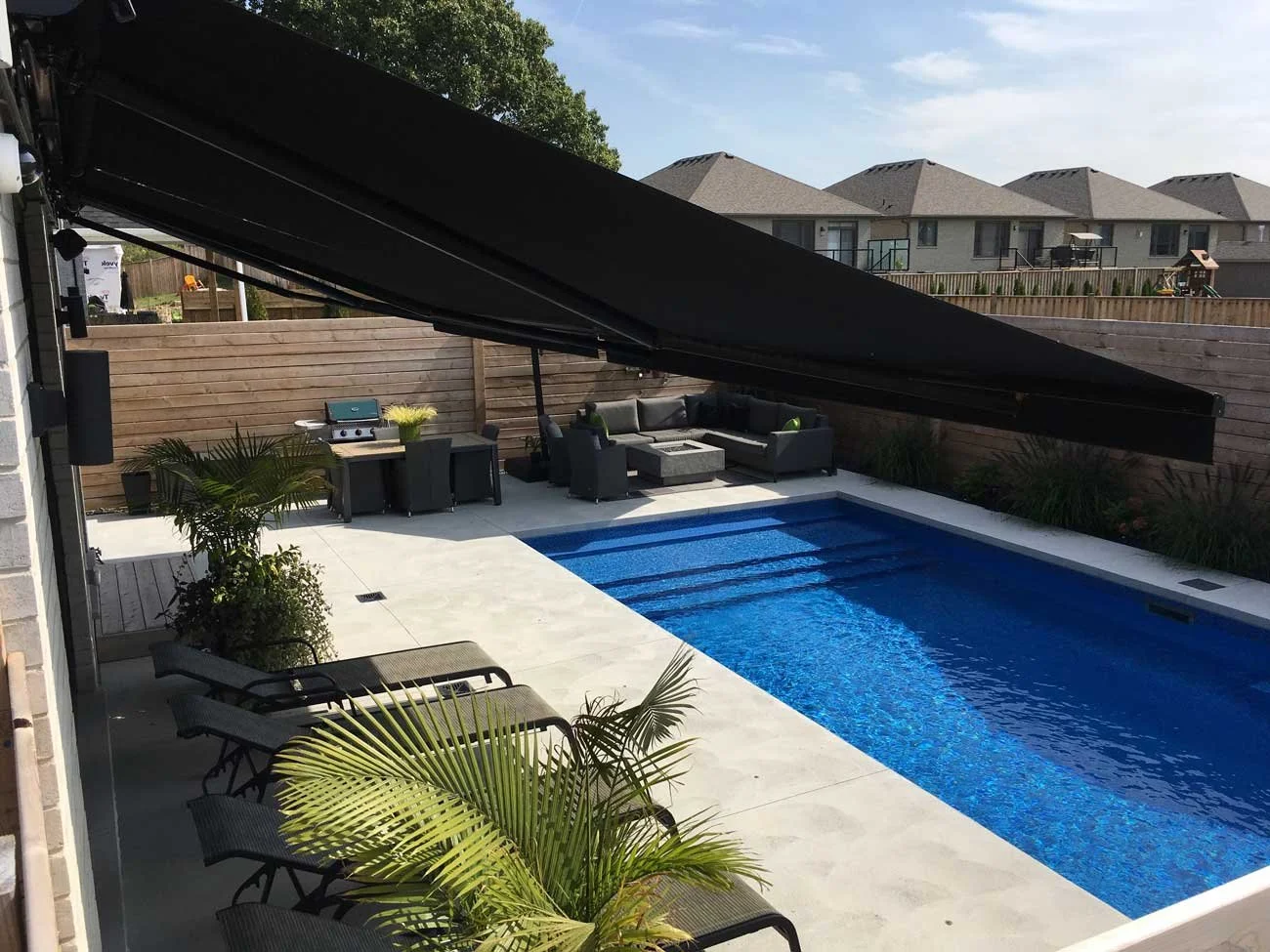
Make the most of your pool all summer long. When the season ends, your awning retracts and stores away cleanly until spring.
Fall: Prepare for Storage Season
As temperatures drop and use slows, give your awning one more thorough cleaning before it sits for the winter.
Repeat the deep clean process from spring
Inspect all hardware one more time
If you have a retractable screen system, before temperatures drop under 5°C, retract it fully for the winter
Winter: Leave It Alone
London winters bring snow, ice, and freeze-thaw cycles. Snow load on an extended awning can cause serious structural damage. Keep your retractable awning fully retracted through the winter months. If you have a stationary awning, make sure to brush off heavy snow accumulation to relieve stress on the frame.
When to Call a Professional
Regular cleaning is a DIY job. But some things are best handled by the people who installed your awning:
Fabric rotation or replacement
Motor or mechanism issues
Arm re-tensioning
Re-pitching the slope
Frame straightening or hardware replacement
London Awnings offers service and repairs. If something doesn't look or work right, contact us at (519) 473-1723 rather than attempting a fix that could cause further damage or personal injury.
How Long Should an Awning Last?
With proper care, our quality fabrics typically last 10–15 years. The best investment you can make in your awning's longevity is the 30 minutes it takes to clean it properly each spring and fall.
Visit our showroom at 2425 Oxford St W, London, Ontario to see products in person and talk through maintenance requirements before you buy. Appointments recommended.